.png)






.svg.webp)
.svg)

Best Options Trading Prop Firms in 2026: What Actually Exists


.svg)
Make money trading our capital



Many options traders reach the same point sooner or later: the strategy works, the risk is controlled, but the account size limits how far it can go.
Selling spreads or managing multi-leg positions with a small account often means keeping position sizes smaller than the strategy really allows. This is one reason options traders have started looking at prop firms. Instead of relying only on personal capital, a funded account lets a trader keep a share of the profits while trading within someone else's risk framework.
But there’s a problem: a dedicated prop firm for listed equity options, real calls and puts on stocks and ETFs, barely exists in 2026. The prop-challenge model that exploded across forex and futures was built around CFDs and futures contracts, not options chains. What actually exists falls into three groups:
- A handful of desk-style firms that have always done options (Maverick Trading, T3 Trading Group, and firms like SMB Capital)
- Futures firms that fund options on futures rather than equity options (Topstep, Elite Trader Funding), and
- Multi-asset or CFD firms where a directional trade stands in for what an option would do
This guide covers all the desk-style options firms, the futures-options route, and where a CFD account like Atlas Funded's fits, and doesn't fit, into that picture.
What Are Options Trading Prop Firms?
An options trading prop firm lets a trader use the firm's capital to trade options. The firm provides funding and, at the desk-style firms, even platforms and training – the trader only needs to bring the strategy. Once funded, the trader keeps a share of the profits, commonly 70% to 90%.
Capital allocation, evaluation structure, profit split, and risk limits vary by firm, but the shape is consistent across virtually all names: you pass an evaluation or qualification process, get access to a funded account, and keep most of what you make (within the firm's risk rules).
Why a Dedicated Options Prop Firm Is Rare
Most retail prop firms run on CFDs or futures because those instruments are simple to standardise into a challenge. That can be a profit target, a drawdown limit, a consistency rule, repeated across thousands of identical accounts.
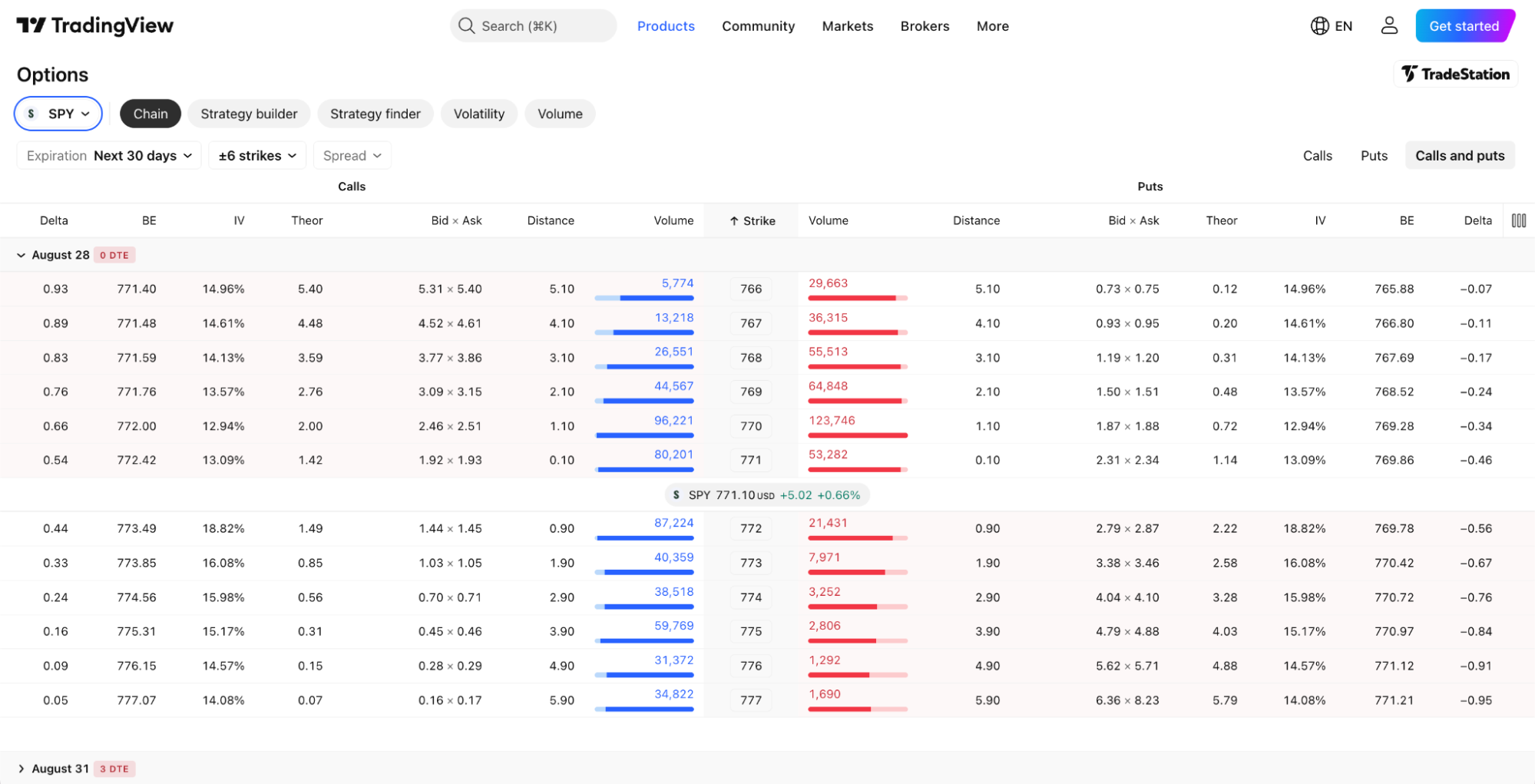
Listed equity options don't standardise the same way. Multi-leg positions, assignment risk, time decay, and Greek-based exposure limits require a different kind of risk infrastructure than a single drawdown number, which is part of why the firms that do support options tend to be older, smaller, and built around individual traders rather than a challenge funnel.
With this in mind, "best" means something different here. Instead of a typical ranked list of 10 interchangeable challenge providers, you’ll find a short list of firms that actually support options, plus a longer list of adjacent products that come close.
Verify a Firm Is Still Operating Before You Pay
This category has seen firms disappear. SurgeTrader, which still turns up on several "best options prop firms" lists, stopped operating in 2024 after losing its trading-platform license. Before paying an evaluation fee anywhere in this space, check that the firm is currently active and has a recent, verifiable payout record. An active homepage means nothing.
Options Prop Firms Worth Knowing in 2026
Maverick Trading

Maverick has been funding options traders since the late 1990s, longer than almost anything else in this list, and it runs more like a professional trading desk than a challenge-based program. New traders go through a qualification process that includes simulations, risk management training, and mentoring before they touch firm capital.
Funded accounts range from modest starting levels up to several hundred thousand dollars for experienced traders, with profit splits starting around 70% and scaling with consistent performance.
Trading runs through platforms including Lightspeed and TDAmeritrade, and the firm supports equity and index options specifically – the latter’s not treated as an afterthought. The mentorship structure suits traders who want the qualification process itself as much as the funding. On the flip side, if you’re already an experienced trader with a highly independent mindset who just wants capital access and minimal oversight, Maverick Trading can feel a bit stifling.
T3 Trading Group
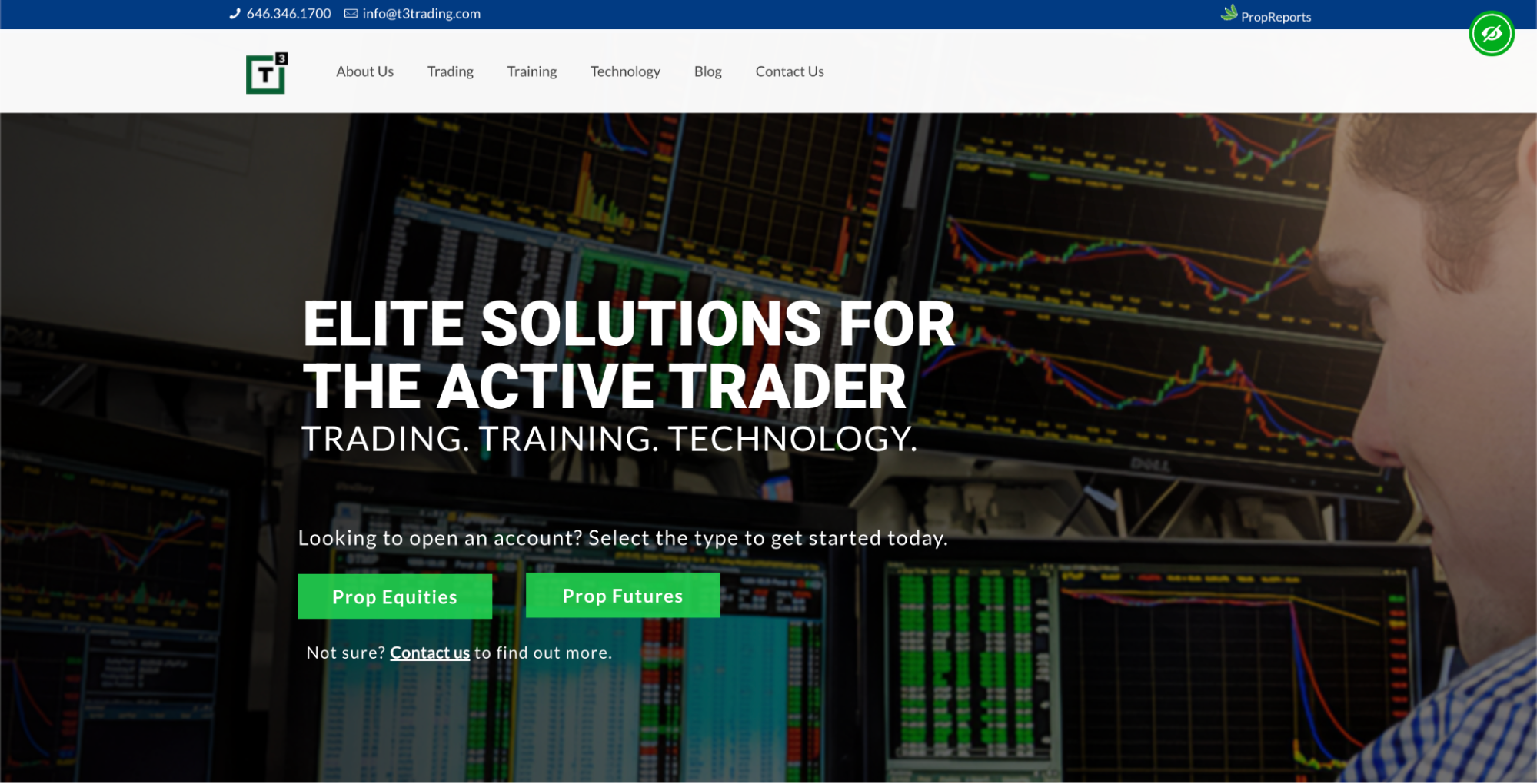
T3 has operated since 2003 and is a registered SEC broker-dealer and FINRA and SIPC member, which puts it in a different regulatory category from most of the firms in this space. It's headquartered in New York with additional offices in New Jersey, Florida, and Georgia, and supports remote traders across the country.
T3 funds equities, options, and futures under one structure, with multi-leg and spread trading permitted subject to compliance and risk approval. Execution runs through Dash Technologies with clearing through firms including Clear Street and Marex. To trade firm capital, options and equities traders need SIE and Series 57 licenses – T3 sponsors qualified candidates who don't yet hold them, and traders may need to contribute first-loss capital to start, though a proven track record can qualify a trader for full firm funding instead. T3 Live, the firm's affiliate, runs live trading floor sessions and coaching alongside the funding relationship.
For a trader who wants regulatory backing and is willing to work toward the licensing requirement, T3 is easily the most credible option covered here.
Funder Trading

Funder Trading offers funded accounts for stocks and options without requiring certifications or upfront capital, which is quite unusual in a sector built around forex and futures challenges. It operates through its own TrueEdge platform and pairs the funding evaluation with an educational library and live coaching sessions.
There are, however, a few things are worth knowing:
- It's priced as a recurring subscription rather than a one-time challenge fee, with a no-refund policy attached
- Its own terms reportedly frame the firm as an educator rather than a source of real trading capital, similar in spirit to the simulated-trading language most prop firms carry
- Multiple trader reports describe restrictions on overnight position holding and multi-leg option strategies specifically
If your strategy depends on holding a spread open overnight, contact Funder Trading and ask them about current holding rules directly before you commit. The firm may be a better match for shorter-duration, single-leg strategies than for the multi-leg approach it's sometimes recommended for.
Futures-Options as a Practical Substitute
If listed equity options aren't the requirement and the underlying need is defined-risk, leveraged exposure with funded capital, futures prop firms are a more standardised and more heavily reviewed route than any of the equity-options desks above.
Topstep

This is arguably the most established name in futures prop trading, running since 2012 with an uninterrupted payout history. It funds CME futures contracts directly, E-mini S&P, crude oil, gold, Treasury bonds, rather than options. Some futures firms in this broader category offer options on futures as an eligible instrument on funded accounts; confirm which specific contracts are eligible before assuming options-on-futures access comes standard. Topstep requires no securities licensing of any kind, which is worth noting given how often its evaluation gets confused with the SIE/Series 57 requirement that actually belongs to desk-style securities firms like T3.
Elite Trader Funding

They offer a wider range of options-on-futures contracts, tied to indices, currencies, and commodities, making it a lower-barrier way to get options-style exposure without the securities licensing path that T3 requires.
Greeks-Based Risk Limits vs. Simple Drawdown
Most prop firm risk rules boil down to one number: a maximum drawdown.
Some options-specific firms layer in Greek-based limits – meaning caps on delta, gamma, and vega exposure, on top of the drawdown figure, because a large short-options position can look fine on a simple P&L basis right up until a gamma spike near expiration wipes out the account. If a firm's risk framework doesn't mention Greeks at all, you should ask them directly how it manages assignment and expiration risk on multi-leg positions before assuming a standard drawdown rule covers it.
Which Options Prop Firm Fits You?
Evaluation vs. Instant Funding
Options prop firms generally follow one of two funding models. Evaluation-based firms, Maverick and T3 among them, require passing a challenge or qualification process before funding. Instant-funding firms, Funder Trading's model among them, skip the formal evaluation in exchange for an upfront fee or subscription, trading a lower barrier to entry for typically stricter ongoing limits.
Are Options Prop Firms Worth It?
They can be, for the right trader. Access to a funded account larger than most people could risk personally makes a working strategy meaningfully more profitable, but it also means operating inside someone else's risk rules, sharing the upside, and, in a category this thin, doing real diligence on whether a firm is registered, still operating, and actually supports the strategy you plan to run. Experienced options traders with a tested strategy get the most out of this model. Beginners looking for options-specific mentorship are better served starting with Maverick's structured path than with an instant-funding product that assumes the strategy already works.
Where Atlas Funded Fits, and Where It Doesn't
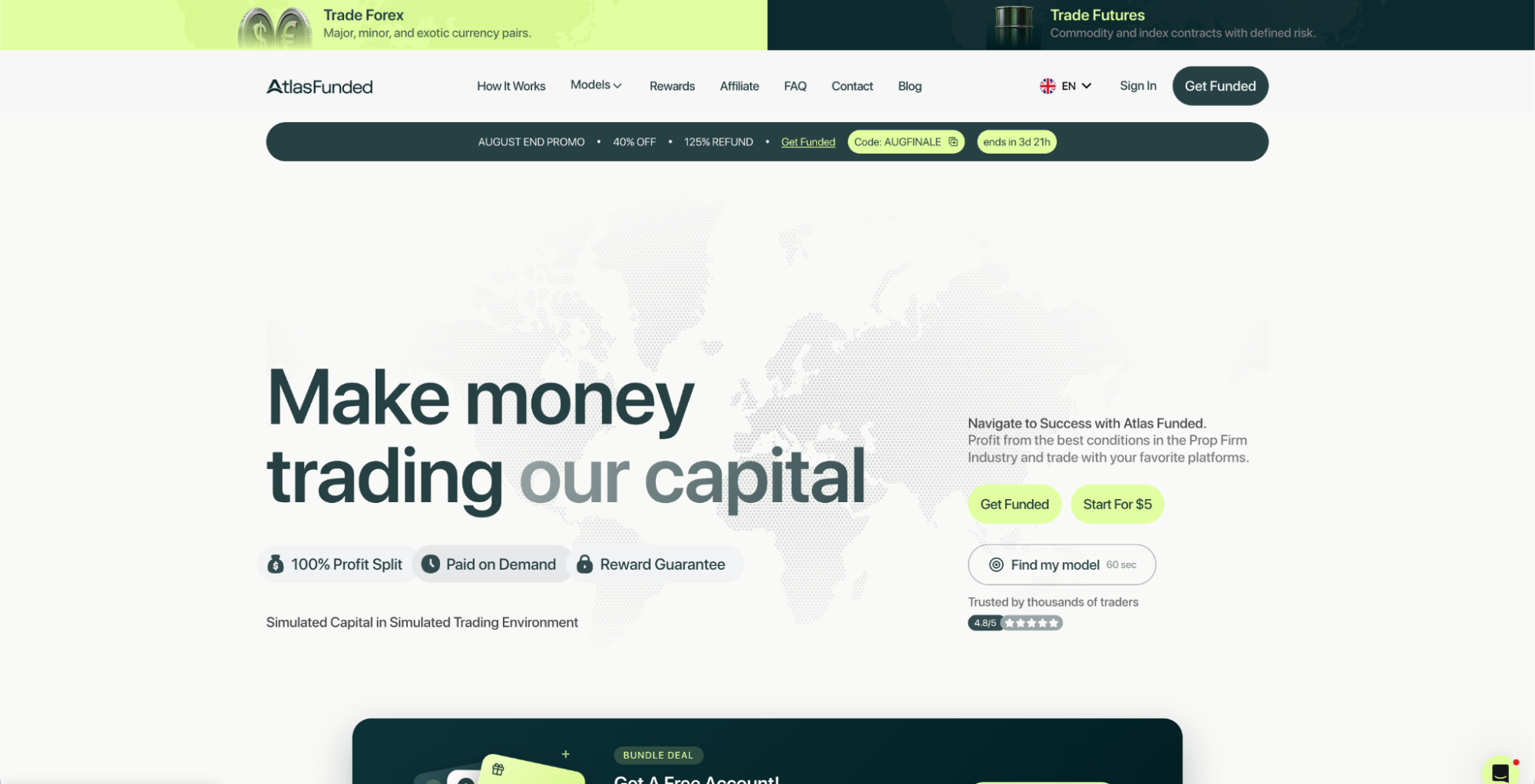
Atlas Funded doesn't offer options. There are no calls, puts, or options chains, and nothing here should be read as a substitute for a desk that actually trades listed options.
What Atlas does offer is funded CFD trading on forex, indices, and commodities through MT5 or TradeLocker, which lets a trader express the same directional or event-driven thesis an option would, a breakout, a mean-reversion setup, a reaction to earnings or economic data, using fixed-percentage risk instead of options-specific tools like defined-risk spreads or Greeks management.
Compare Atlas Funded's models if that kind of directional trading is a fit alongside (not instead of) a genuine options account elsewhere.
FAQs
Final Thoughts
Options trading prop firms exist, but the category is thinner and more specialised than a typical prop firm comparison implies. A handful of desk-style firms, Maverick and T3 chief among them, have supported options for years and are worth the qualification process they require. A smaller number of newer entrants make bigger claims with less regulatory backing, worth verifying directly rather than taking at face value. Futures-options through Topstep or Elite Trader Funding is a more standardised route if equity options specifically aren't the requirement. And a CFD account, Atlas Funded's included, can express similar directional ideas without being an options product at all.
Match the firm to the strategy you actually run, and verify registration status and current operating status before paying for any evaluation in this space.
Our guide on how to become a prop trader covers the traditional desk-job path and the funded-account route in full.
.webp)
.webp)
.png)



.avif)
.avif)
.avif)
.avif)